
Description
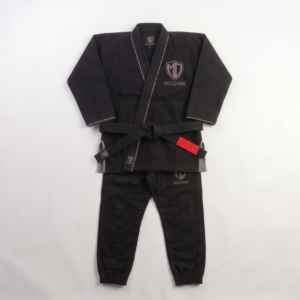
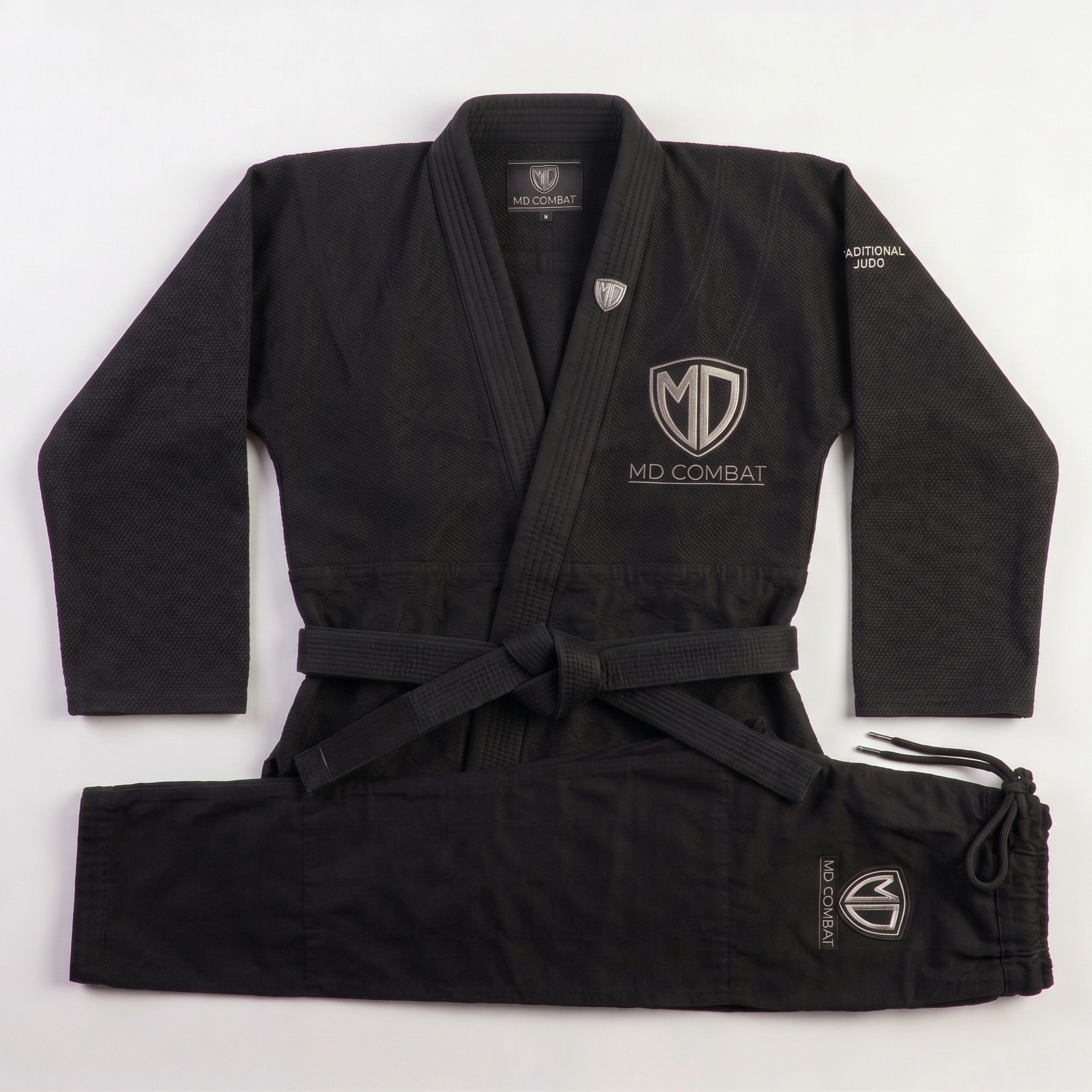
MD COMBAT Custom BJJ Gi are manufactured for the most technically demanding segment of the combat sports uniform market. Brazilian Jiu-Jitsu practitioners are among the most informed, quality-conscious consumers in all of combat sports — they train in their gi for hours every day, they wash it after every session, they feel every seam, they notice every detail of weave quality and construction, and they discuss their equipment openly within their academy communities. When an academy owner, club manager, or brand owner places a bulk BJJ gi order, they are not just buying a product — they are putting their reputation on the mat with every athlete who wears it. We manufacture to the standard that reputation demands.
The BJJ gi consists of the jacket (kimono top), the trousers (calça), and the belt (faixa). The kimono top is the most technically complex garment in the combat sports manufacturing category — it must be simultaneously strong enough to resist the pulling, gripping, and twisting forces of submission grappling, flexible enough to allow the full range of guard, passing, and submission techniques, durable enough to withstand daily washing and years of hard training, and lightweight enough to make competition weight requirements where applicable. Achieving this balance requires the right fabric construction, the right weave pattern, and the right stitching density at every structural point.
IBJJF (International Brazilian Jiu-Jitsu Federation) competition regulations define the technical standard that the global BJJ gi market is built around. IBJJF-compliant gi must meet specific requirements in jacket material — cotton or cotton-blend woven fabric — with collar and lapel thickness not exceeding defined limits, sleeve and trouser length requirements referenced to body measurements, and colour restrictions to white, royal blue, or black for competition. Our gi are manufactured to IBJJF competition specifications as standard and we can provide fabric weight and construction documentation when buyers need to demonstrate compliance for federation approval processes.
Fabric weave type is the primary specification decision in BJJ gi manufacturing and the area where the most variation and buyer preference exists in the market. Pearl weave is the global standard and the most widely specified construction — a slightly textured, tight weave pattern that provides an excellent balance of strength, weight, and shrinkage resistance. It is the correct choice for the majority of club sets and commercial gi programmes and it is our highest-volume production fabric. Gold weave is a heavier, denser construction that prioritises durability and structure above all — it is favoured by competition-focused practitioners who prioritise gi stiffness for grip defence and by traditional academies that want a gi with a formal, substantial feel. Ripstop fabric — a grid-reinforced lightweight weave where reinforcing threads run at regular intervals through the base fabric — is used for gi jackets targeting the competition weight-cutting market, where minimising gi weight before weigh-in is a competitive priority. Single weave is the entry-level construction, lighter and less expensive than pearl weave, commonly specified for large-volume beginner programme orders where cost management is a priority.
The trouser construction is equally important to the jacket. Our BJJ gi trousers are produced in ripstop cotton or cotton-blend ripstop — the correct material that provides durability against knee sliding and guard pulling without the weight of jacket-weight canvas. The waistband features a flat cotton drawstring with reinforced eyelet construction. The knee area is reinforced with a separate panel of heavier ripstop or canvas fabric to resist the abrasion from kneeling, knee sliding, and standing knee positions that characterise BJJ ground work. Inseam stitching is reinforced with multiple rows of stitching that resist the lateral stress of open guard and leg lock positions.
Collar construction is the most technically demanding single component of the BJJ gi. The collar must be thick and stiff enough to be genuinely difficult to grip — as required by IBJJF regulations — while being comfortable against the neck during extended training. Our collar is constructed with a multi-layer EVA foam core encased in cotton canvas fabric, stitched through with the jacket side panel to create a unified structural element rather than a separately attached component. Collar thickness is typically 1.5 to 2 centimetres as manufactured, relaxing slightly after initial washing and use to the competition-compliant range.
Customization is a major commercial driver in the BJJ gi market. Every serious academy wants its own branded gi — the gi is the most-worn garment in the sport, training partners see it daily, and competitors wear it at every tournament. Custom embroidery is the standard decoration method: dojo name across the back skirt of the jacket, club patch on the chest and sleeve, national flag on the opposite sleeve, and custom woven rank patches for belt levels. We produce complete academy sets with matching embroidery across all gi colour options — white, blue, and black — and we produce IBJJF competition rank-colour matched patches for each belt level. For brand owners building a commercial BJJ gi label, we offer full OEM production with custom woven labels, custom rubber patches, custom belt embroidery, and retail-ready packaging.
Fabric Options:
Jacket: Pearl Weave Cotton 450–550 GSM (global standard, balanced performance) · Gold Weave Cotton 550–650 GSM (competition durability, maximum grip resistance) · Ripstop Cotton 350–420 GSM (competition lightweight, weight-cut friendly) · Single Weave Cotton 350–400 GSM (entry-level, high-volume beginner programmes) · Cotton-Polyester Blend Pearl Weave (easy-care, reduced shrinkage)
Trousers: Ripstop Cotton (standard BJJ trouser fabric) · Canvas Cotton (heavy-duty training) · Cotton-Poly Ripstop Blend (easy-care, reduced shrinkage)
Technical Construction Features: IBJJF competition-compliant cut and sizing · EVA foam multi-layer collar construction (1.5–2 cm thickness) · Reinforced knee panel on trousers (separate fabric layer) · Multiple-row reinforced inseam stitching · Flat cotton drawstring with reinforced eyelets · Jacket skirt extends below hip (IBJJF standard) · Sleeve length to wrist (IBJJF standard) · Double-stitched seams throughout · Pre-shrunk fabric option (reduces post-wash size change)
Customization Options: Machine embroidery (back skirt, chest, sleeve — up to 15,000 stitches) · Custom woven patches (sewn or iron-on) · Rubber and silicone logo patches · National flag and academy crest embroidery · Custom woven labels (collar and trouser) · Belt embroidery · IBJJF rank colour sets (white, blue, black) · OEM full private-label package · Retail-ready box packaging
Sport and Use Applications: BJJ gi training — daily academy use · IBJJF competition — local, national, and international · Nogi academy gi training programme · National BJJ federation team gi · Youth BJJ children’s academy programme · BJJ belt grading examination gi · Commercial academy retail merchandise · BJJ brand OEM and private-label · Online BJJ retail and e-commerce
Production and Trade Information: MOQ: 50 sets (jacket, trousers) per colour · Belt (faixa) supplied separately or as set · IBJJF colour options: white, royal blue, black · Pre-shrunk and standard-shrink options · Sample lead time: 14–21 days (collar construction requires additional sample time) · Bulk lead time: 45–60 days · Youth and women’s patterns available · Incoterms: FOB, CIF, EXW · Shipping: DHL, FedEx, Sea Freight
Size Chart — Adult Men’s (measurements in cm, tolerance ±2 cm, measurements taken before washing):
| Size | Height Range | Weight Range | Jacket Length | Sleeve | Trouser Inseam | Chest |
|---|---|---|---|---|---|---|
| A0 | 155–163 | 55–64 kg | 68 | 53 | 78 | 90–96 |
| A1 | 163–170 | 64–73 kg | 72 | 56 | 81 | 97–103 |
| A2 | 170–177 | 73–83 kg | 76 | 59 | 84 | 104–110 |
| A3 | 177–183 | 83–93 kg | 80 | 62 | 87 | 111–118 |
| A4 | 183–190 | 93–105 kg | 84 | 65 | 90 | 119–126 |
| A5 | 190–198 | 105–120 kg | 88 | 68 | 93 | 127–135 |
| A6 | 198–208 | 120–140 kg | 92 | 71 | 96 | 136–145 |
Size Chart — Women’s (measurements in cm, tolerance ±2 cm):
| Size | Height Range | Weight Range | Jacket Length | Sleeve | Trouser Inseam | Chest |
|---|---|---|---|---|---|---|
| F0 | 148–156 | 44–52 kg | 62 | 48 | 73 | 78–84 |
| F1 | 156–163 | 52–60 kg | 66 | 51 | 76 | 85–91 |
| F2 | 163–170 | 60–70 kg | 70 | 54 | 79 | 92–98 |
| F3 | 170–177 | 70–80 kg | 74 | 57 | 82 | 99–106 |
| F4 | 177–183 | 80–92 kg | 78 | 60 | 85 | 107–114 |
Size Chart — Youth / Children (measurements in cm, tolerance ±2 cm):
| Size | Age Range | Height Range | Jacket Length | Sleeve | Trouser Inseam |
|---|---|---|---|---|---|
| M0 | 3–4 yrs | 95–105 | 42 | 30 | 48 |
| M1 | 5–6 yrs | 105–115 | 46 | 33 | 53 |
| M2 | 7–8 yrs | 115–125 | 52 | 37 | 59 |
| M3 | 9–10 yrs | 125–135 | 58 | 41 | 65 |
| M4 | 11–12 yrs | 135–145 | 64 | 45 | 71 |
| M5 | 13–14 yrs | 145–155 | 68 | 49 | 75 |